


BLOG
How Long Do Cigars Last in a Humidor? Expert Guide


A premium cigar can age beautifully, or fall apart quietly if we store it the wrong way. That’s why one of the most common questions among enthusiasts is simple: how long do cigars last in a humidor? The short answer is: a long time, often years, if humidity, temperature, and airflow stay in the right range. The less helpful answer is that it depends, and in the cigar world, that dependence matters.
Whether we’re keeping a few Cubans for the weekend or building a serious collection of rare non-Cubans, storage is what protects flavor, burn quality, and aroma. A well-kept humidor doesn’t just preserve cigars: it gives them a stable environment to settle, marry, and sometimes improve with age. But boxes, wrappers, tubes, and even the humidor itself all play different roles.
Let’s break down what really affects cigar lifespan, what happens when cigars dry out, and how to store them so they smoke the way they were meant to.
Key Takeaways
- Cigars last for years in a properly maintained humidor with stable humidity (65%–72%) and temperature (65–70°F).
- Storing cigars in their original box inside a humidor is often beneficial for aging and protection, provided there is adequate airflow.
- Dry cigars lose flavor, burn quality, and aroma, and while they can be slowly rehydrated, they rarely fully recover their original character.
- Using quality humidification tools like calibrated digital hygrometers and seasoning your humidor ensures optimal cigar preservation.
- Avoid temperature spikes and overcrowding in the humidor to prevent damage and uneven humidity distribution.
- Cigars outside a humidor can degrade in just days, becoming dry, bland, or prone to mold and beetle infestation.
What Happens When Cigars Dry Out?

When cigars dry out, they don’t just lose a little moisture, they lose structure, aroma, and much of the character we paid for.
A properly stored cigar typically sits around 65% to 72% relative humidity, with many smokers preferring the narrower sweet spot of 68% to 70%. Once humidity drops too far below that range for too long, the wrapper becomes brittle, the oils recede, and the tobacco inside starts to unravel chemically and physically.
Here’s what we usually notice first:
- A harsher, hotter smoke
- Faster burn rate
- Cracking wrappers
- Muted or flat flavor
- Uneven combustion and draw problems
The flavor loss is the real heartbreak. Premium cigars, especially well-made Cuban cigars and high-end non-Cuban blends, depend on retained oils and stable moisture to deliver complexity. When they dry out, subtle notes of cedar, cocoa, spice, earth, leather, or cream can collapse into something papery and sharp.
Can dry cigars be saved? Sometimes, yes. If they haven’t become severely brittle, we can often reintroduce humidity slowly over several weeks in a properly seasoned humidor. But slowly is the key word. Rehydrating too fast can split the wrapper or create a lumpy, uneven cigar.
And even when a dried cigar becomes smokable again, it may never fully recover its original balance. Think of it like stale bread warmed in the oven, it might become usable, but it won’t be exactly fresh.
That’s why prevention always beats rescue.
What’s the Right Way to Store Cigars?
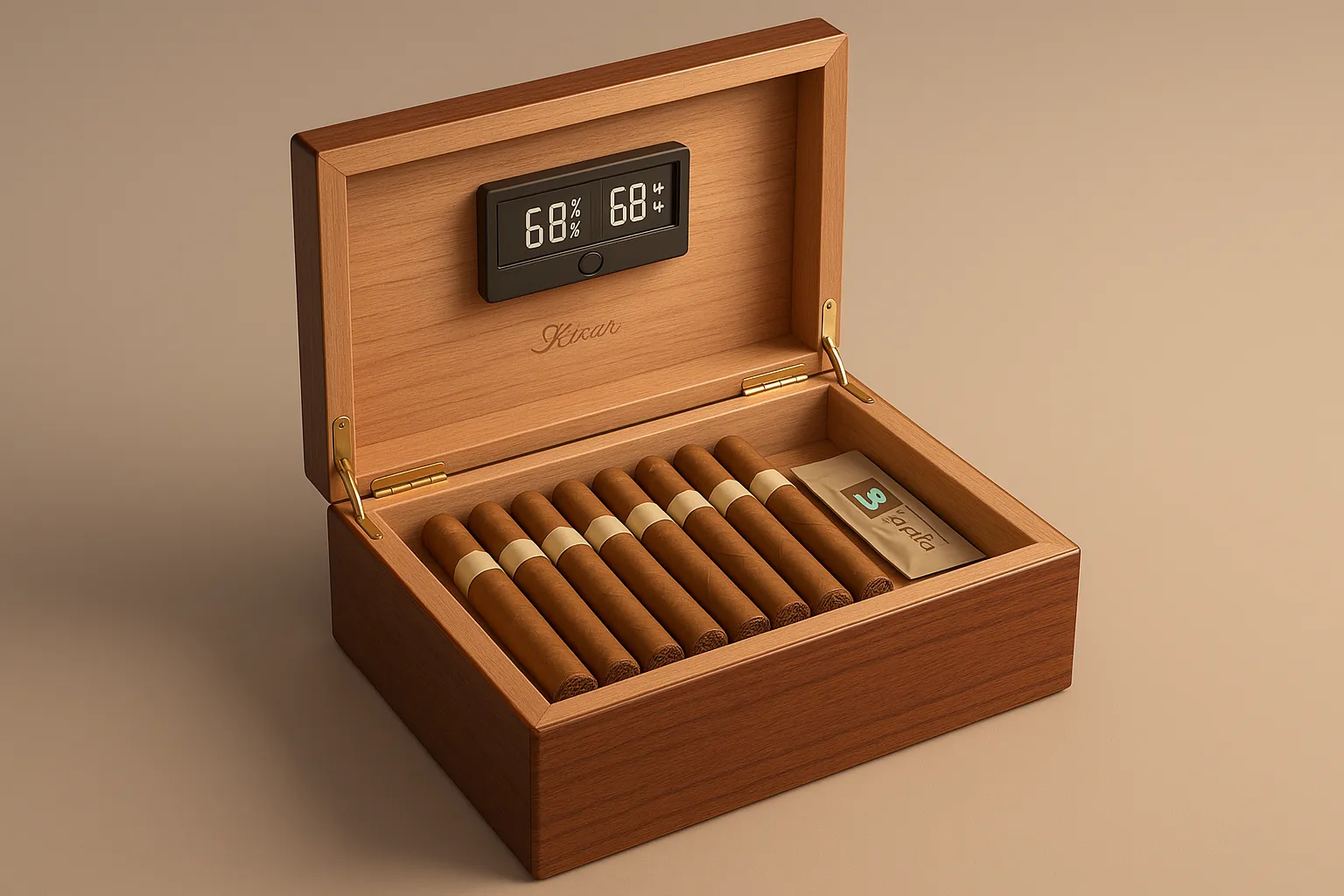
The right way to store cigars is boring in the best possible sense: stable humidity, stable temperature, minimal disturbance.
For long-term storage, we want a quality humidor or another tightly controlled environment that keeps cigars around:
- 65%–72% RH
- 65–70°F
Many collectors now lean slightly lower on humidity, around 65% to 69% RH, because cigars often burn better there, especially in warmer climates. But consistency matters more than chasing an exact magic number.
A few best practices make a huge difference:
Season the humidor properly
A wooden humidor, especially one lined with Spanish cedar, needs to be seasoned before use. Otherwise, the wood will pull moisture from the cigars instead of supporting a stable environment.
Use reliable humidity control
Boveda packs, humidity beads, or electronic humidification systems all work if they’re sized correctly for the humidor. Cheap analog hygrometers, though, are often wildly inaccurate. We prefer a calibrated digital hygrometer.
Avoid temperature spikes
Heat is an underrated cigar killer. Even if humidity looks acceptable, excessive heat can encourage tobacco beetles and accelerate aging in the wrong way. Cooler, steady storage is safer.
Don’t overcrowd the humidor
Cigars need some airflow. If we pack the humidor too tightly, humidity can become uneven from one corner to another.
Rotate and check periodically
We don’t need to obsessively handle cigars, but occasional checks help us spot mold, dryness, over-humidification, or damaged wrappers before a small issue becomes a big one.
For collectors buying from reputable specialists, starting conditions matter too. At Sig Addict, for example, cigars are kept under optimal storage conditions before shipping, which gives buyers a much better foundation for aging and preserving premium sticks once they arrive. That’s not a small detail. Great cigars can still suffer if they begin their journey poorly stored.
If we get the basics right, cigars can remain smoke-ready for years, and some can age into something even more refined.
How Long Do Cigars Last in Their Original Box, Wrapper, or Tube?

This is where a lot of cigar owners get tripped up. Original packaging helps, but it’s not the same thing as proper humidification.
Boxes, cellophane, and tubes provide some protection against sudden environmental changes, but none of them replace a humidor for serious storage. How long cigars last in these formats depends on the seal, surrounding climate, and how long we’re talking about.
How long do sticks last in a cigar box?
A cigar box is mainly for presentation, organization, and light buffering from outside conditions. It is not a self-contained humidor unless it’s specifically designed as one.
In a normal room environment, cigars in their original box may stay decent for:
- A few days to a couple of weeks in a mild climate
- Less time in dry, air-conditioned, or heated indoor environments
If the box is unopened and tightly packed, cigars may hold moisture a bit longer because the tobacco inside creates a microclimate. But that effect is temporary. Over time, the cigars will equalize with the room around them.
Inside a humidor, though, keeping cigars in the original box can be perfectly fine, and often preferable for collectors. We’ll get to that shortly.
How long do cigars last in cellophane and plastic tubes?
Cellophane and tubes slow moisture loss, but they don’t stop it forever.
Cellophane-wrapped cigars usually last longer outside a humidor than naked sticks because the wrapper acts as a breathable barrier. In decent indoor conditions, they might remain acceptable for several weeks, sometimes a bit longer. But flavor and ideal smoking condition will still decline over time.
Plastic or aluminum tubes generally offer better short-term protection because they limit airflow more aggressively. Tubed cigars can often hold up for weeks to a few months, depending on how tightly sealed the cap is and how dry the environment is.
That said, tubes can create a false sense of security. A cigar in a tube is protected, not immortal. For long-term aging, tubes should still be stored in a humidor.
If we’re planning to smoke the cigar soon, original packaging is usually enough. If we want to preserve quality beyond the near term, controlled humidity is the answer.
Do Cigars Go Bad If Not in a Humidor?

Yes, they can, and often faster than people expect.
If by “go bad” we mean becoming unsafe, that’s not usually the first issue. The bigger problem is that cigars outside a humidor gradually lose the moisture balance needed for a proper smoke. They may not rot overnight, but they can absolutely become dry, bland, fragile, and unpleasant.
In an average home, cigars left out in the open can start showing quality decline in just a few days. In very dry climates, winter heating, or strong air conditioning, the drop can be even quicker.
There are also two other risks on the opposite end:
- Excess moisture, which can invite mold
- High temperatures, which can trigger tobacco beetles
So yes, cigars not in a humidor are exposed from both sides. Too dry and they crack. Too humid and they can mold. Too warm and they can become infested. It’s a surprisingly narrow lane.
For short periods, a temporary airtight container with a humidity pack can work as an emergency setup. Many enthusiasts use sealed plastic boxes or travel humidors when a traditional desktop unit isn’t available. But for anything beyond temporary storage, a true humidor is the safer move.
This matters even more with premium cigars. If we’re investing in limited releases, aged Cubans, or sought-after non-Cuban brands, storing them casually on a shelf is a bit like parking a classic car outside with the windows cracked. Maybe fine for a moment. Not fine for long.
Can You Leave Cigars in the Box in a Humidor?

Yes, we absolutely can leave cigars in the box in a humidor, and many collectors prefer to.
Keeping cigars boxed has a few advantages:
- Protection from handling damage
- Better organization by brand, vitola, or age
- Preservation of original presentation and provenance
- A slower, gentler exchange with the humidor environment
This is especially common with collectors holding full boxes of Cuban cigars for long-term aging. Original boxes, often made with cedar elements, can support a gradual and stable resting process.
But there are a few caveats.
First, the humidor must be large enough to allow airflow around the boxes. If we cram box upon box into a small space, humidity can become inconsistent.
Second, tightly sealed or heavily packed boxes may take longer to acclimate. That’s not necessarily bad, it just means we should give them time.
Third, if we’re using a small desktop humidor, loose cigars may humidify more evenly than several dense boxes stacked together. Capacity matters.
For serious aging, boxed storage inside a properly managed humidor is often ideal. For mixed everyday smoking stock, many enthusiasts keep some cigars boxed and others unboxed for convenience.
In other words: keeping cigars in the box in a humidor is not only acceptable, it’s often smart.
The Role of a Humidor
A humidor’s job is simple on paper and surprisingly important in practice: it creates a stable environment where cigars can retain moisture, preserve essential oils, and age at a controlled pace.
Without that stability, cigars are at the mercy of the room. And rooms are inconsistent. Daytime heat, nighttime cooling, AC, winter heating, open windows, every swing affects tobacco.
A good humidor helps by doing three things:
- Maintaining relative humidity in the correct range
- Buffering against environmental fluctuations
- Supporting aging and flavor development over time
That third point is why humidors matter so much to collectors. Cigars don’t just survive in a humidor: some of them evolve. Strong edges can soften. Flavors can integrate. Harshness can mellow. Not every cigar improves dramatically with age, but many premium cigars benefit from rest in stable conditions.
Spanish cedar also plays a supporting role in many traditional humidors. It helps regulate humidity, discourages tobacco pests to a degree, and contributes that unmistakable cedar aroma we associate with well-kept cigars.
Of course, a humidor isn’t magic. It still needs maintenance:
- Replacing humidity packs or refilling systems
- Calibrating or checking hygrometers
- Monitoring temperature
- Avoiding mold from excessive humidity
Still, if we’re serious about cigar quality, the humidor is the center of the whole equation. It’s the difference between storing cigars and actually caring for them.
Factors Influencing Cigar Longevity
So, how long do cigars last in a humidor? In a properly maintained one, many cigars can last for years, and some can age gracefully for a decade or more. But longevity depends on more than simply owning a humidor.
Here are the main factors that shape how long a cigar stays in peak condition.
Humidity level
Too low, and cigars dry out. Too high, and they can swell, burn poorly, or risk mold. For most collections, the sweet spot is around 65% to 70% RH.
Temperature
Ideal cigar storage is usually around 65–70°F. Higher temperatures increase the risk of beetles and destabilize the aging process.
Construction quality
Well-made cigars with quality wrapper, binder, and filler tend to age and store better than poorly rolled sticks. Dense construction, intact wrappers, and balanced moisture all help.
Tobacco quality and blend
Some blends are built for aging: others are best enjoyed young. Stronger, more complex cigars often develop interesting changes over time, while delicate profiles can fade if held too long.
Boxed vs. unboxed storage
Boxed cigars may age more gradually. Unboxed cigars can acclimate faster. Neither is automatically better, it depends on our humidor size, goals, and how often we access them.
Frequency of opening the humidor
Constant opening causes shifts in humidity and temperature. In a small humidor, those swings can be noticeable.
Local climate
A collector in Arizona is fighting a different battle than one in coastal Spain or Florida. Ambient conditions affect how hard the humidor has to work.
Starting condition
This one gets overlooked. A cigar that arrives already well stored has a much better chance of lasting. A cigar that’s been mishandled in transit or stored poorly before purchase may never fully recover, even in a perfect humidor.
That’s why sourcing matters. When buying premium cigars online, especially authentic Cuban cigars, we want a seller that treats storage and shipping as part of the product, not an afterthought.
In practical terms, here’s the takeaway: if we store cigars correctly in a well-managed humidor, they can remain excellent for years. If we neglect humidity, temperature, or airflow, even a world-class cigar can lose its magic much sooner than expected.
Frequently Asked Questions About How Long Cigars Last in a Humidor
How long do cigars last in a properly maintained humidor?
Cigars stored in a well-maintained humidor with stable humidity (65%–72%) and temperature (65–70°F) can last for years, with some aging gracefully for a decade or more while preserving flavor and quality.
What happens to cigars if they dry out in a humidor?
When cigars dry out, their wrappers become brittle, oils evaporate, and the tobacco loses aroma and flavor complexity, resulting in a harsher, faster burn with muted taste. Dry cigars may sometimes be rehydrated slowly but might not fully recover original quality.
Can I leave cigars in their original box inside a humidor?
Yes, leaving cigars in their original box inside a humidor is common and beneficial for long-term aging. Boxes provide protection and help preserve presentation, but ensure the humidor is not overcrowded to maintain proper airflow and humidity balance.
How long do cigars last in their original packaging outside a humidor?
Outside a humidor, cigars in their original box may last from a few days up to a couple of weeks depending on climate and packaging. Cellophane or plastic tubes can extend freshness for several weeks to a few months, but they do not replace humidor storage for long-term quality.
What is the best humidity and temperature range to store cigars in a humidor?
The ideal storage range in a humidor is around 65% to 72% relative humidity and 65°F to 70°F temperature. Stability within these ranges preserves cigar structure, prevents mold or drying, and supports aging and flavor development.
Why do cigars go bad if not stored in a humidor?
Without a humidor, cigars lose moisture balance quickly, becoming dry, brittle, and losing flavor. They are also vulnerable to excessive humidity causing mold, and heat that can invite tobacco beetles, making proper humidor storage essential for preserving quality.